



When an international food manufacturer thickens a high-demand sauce, a global textile brand coats its luxury fibers, or an enterprise paper mill finishes high-grade sheets, they are utilizing raw agricultural starch. To the general consumer, these everyday items exist without a second thought. They buy processed foods, eco-friendly packaging, and plant-based consumer goods, treating their mass availability as a basic standard of modern retail convenience.
However, behind these essential industrial raw materials lies one of the most structurally demanding sectors in international trade: the agricultural commodity processing and export network. Unlike manufacturing sectors that work with uniform synthetic compounds, the agricultural sector handles delicate, variable organic assets. A shift in seasonal weather patterns, improper moisture management during processing, or a single lapse in international customs documentation can instantly degrade entire cargo loads, disrupting global factory operations and causing deep economic losses.
As populations expand and major markets demand sustainable, clean-label raw materials, simple farming models are no longer sufficient to serve the global grid. For agricultural networks, raw materials processors, and global trade operations, maintaining an edge relies entirely on advanced dehydration engineering, strict molecular quality management, and efficient international export channels.
1. The Engineering of Industrial Starch: Transforming Raw Root Crops
To understand the operational complexity of modern agricultural commodities, one must examine the production process through the lens of industrial food science. Converting raw root crops, such as harvested cassava roots, into stable, export-ready industrial powders like high-whiteness tapioca starch is a highly systematic process.
The industrial starch manufacturing sequence relies on four highly controlled mechanical steps:
- Hydro-Centrifugal Purification: Washing fresh harvested crops in high-volume water tracks to clear out organic dirt and outer skin layers before milling.
- Cellular Rasping and Slurry Extraction: Grating the dense roots at ultra-high speeds to break open cell walls and release trapped starch granules into a fluid slurry.
- De-Sanding and Micro-Sieving: Running the slurry through pressurized hydrocyclones to extract fine fiber scraps and minerals, leaving a pure starch liquid.
- Precision Thermal Dehydration: Driving the liquid starch through specialized solar-assisted ovens and high-capacity flash dryers to bring moisture down to precise safety baselines.
Engineering these large-scale processing lines requires strict adherence to biological safety boundaries. Dehydration machinery must lock moisture metrics strictly below 13% to 14% to completely prevent the growth of mold or bacteria during transoceanic shipping. Furthermore, the final output must clear stringent whiteness indices (typically greater than 90%) to meet the strict quality benchmarks of premium international food, chemical, and pharmaceutical buyers.
2. Navigating Global Trade: Indonesian Commodities on the World Stage
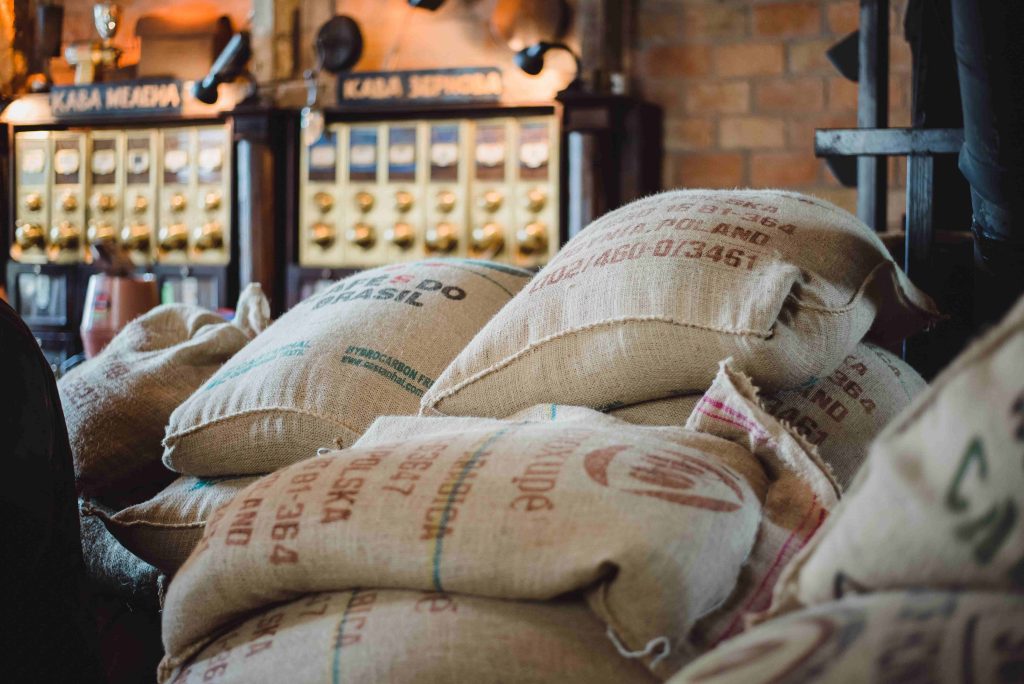
Managing high-volume agricultural logistics introduces major operational challenges, especially when working across tropical production centers like Southeast Asia. High humidity levels, complex maritime geography, and strict border regulations require processing networks to act as highly competent export centers capable of guaranteeing absolute product uniformity across varying shipping environments.
For bulk ingredient buyers, multi-national food groups, and industrial manufacturing firms looking to secure a continuous, top-tier supply of raw agricultural inputs, partnering with a vetted origin operator is a vital corporate strategy. Coordinating sourcing through a premier trade channel like agroloka commodity gives enterprise clients direct access to premium Indonesian agricultural products and high-grade tapioca starch, backed by rigorous quality control, modern factory processing, and complete regulatory certifications.
When a manufacturing firm utilizes a processing matrix backed by certified production standards, they eliminate the quality variations that threaten factory lines. Advanced processing centers combine traditional solar drying practices with precision automated mechanical ovens. This ensures that even during intense tropical rainy seasons, the facility outputs identical, high-viscosity starch particles that flow perfectly through international industrial machinery.
3. The Quality Grid: Analytical Control and Food Safety Certifications
Beyond industrial grinders and massive drying towers, the modern agricultural export business is governed by tight compliance benchmarks. Modern international markets demand absolute proof that a food-grade commodity has been processed in an sterile environment, free from chemical adulteration and biological threats.
To maintain this absolute data-traceability, advanced export processing hubs run rigorous quality control steps inside dedicated laboratory environments. These analytical verification setups evaluate every single batch for:
- Viscosity and Gelatinization Performance: Measuring how the starch reacts under temperature changes to ensure it performs identically in food production lines.
- Ash and Fiber Content Verification: Using high-temperature ovens to burn test samples down to ash, confirming the raw starch is free from unwanted mineral dust or organic impurities.
- Strict Microbial Screening: Testing for pathogens to verify full compliance with international consumer safety laws.
By backing up raw agricultural production with verified lab testing and clear documentation, export networks secure ironclad customs approvals while giving global purchasing managers full confidence in the safety of their incoming ingredients.
4. Optimizing Processing Efficiency and Sustainable Agricultural Loops
One of the largest operational challenges facing any industrial-scale agricultural facility is handling waste streams and managing heavy energy draw. Running high-volume washing tracks and massive flash dryers requires significant electrical and thermal power, leaving operations exposed to energy market spikes.
To optimize these operational costs, processing engineers deploy closed-loop water filtration systems across their washing grids. Water used to clean initial root crops is piped into multi-stage settling ponds and bio-filters, allowing the factory to safely recycle thousands of gallons of water daily, drastically lowering groundwater extraction.
Additionally, processing factories are increasingly reusing solid fibrous root residues—the byproduct leftover after starch extraction. Rather than dumping this organic material into local landfills, it is compressed into nutrient-dense animal feed or routed into biomass burners to help power the facility’s drying ovens. This circular design cuts fuel costs while lowering the total carbon footprint of the commercial processing loop.
5. Aligning Operational Strength with Modern Corporate Visibility
For trade directors, commodity brokers, and agricultural brand managers, launching an international ingredient line or coordinating multi-tier export channels can quickly become an overwhelming logistics puzzle. It requires handling complex ocean freight agreements, checking country-specific customs codes, and managing farm-level supply lines simultaneously.
When mapping out these long-term international expansion pathways, analyzing structured digital marketing programs education provides business leaders with a clear, systematic framework for connecting physical processing power with digital client-acquisition channels. Learning how targeted B2B content positioning and international SEO strategy interact ensures that a premier agricultural facility is supported by a steady pipeline of global enterprise leads.
When handling complex export documentation, arranging customs inspections, or coordinating farm-level harvest timelines, execution bottlenecks can easily stall corporate momentum. Reviewing practical strategies on how to stop procrastinating empowers operational managers to keep teams focused on tight timelines, streamline vendor communication loops, and hit shipping dates without expensive delays at port terminals.
6. The Horizon: Blockchain Traceability and Smart Farming Networks
Looking out toward the future of global agricultural trade, the integration of data networks and distributed ledgers will continue to reshape the industry. The next primary breakthrough is the deployment of blockchain-backed crop tracking systems from farm to factory.
By uploading harvest dates, regional fertilizer profiles, and factory processing temperatures to encrypted, immutable digital ledgers, exporters can give global buyers total transparency over the history of their raw materials. A buyer in Europe or North America can scan a QR code on a bulk cargo pallet and instantly verify the exact farming community in Central Java that cultivated the crop, along with its specific safety profile. This data-driven transparency reduces processing risks for factory networks while commanding premium prices in eco-conscious consumer markets.
Conclusively, a strong global economy relies on a highly resilient agricultural and technical foundation. The seamless access to pure, high-performance starches and organic ingredients that modern manufacturing lines rely on is fully enabled by the engineering precision, lab testing, and supply chain logistics operating around the clock. By merging traditional agricultural craftsmanship with smart automated software, commodity networks can confidently navigate shifting trade rules and build a highly resilient, food-secure global supply chain. For more deep breakdowns on tech networks, operational strategies, and business execution, follow along at Genecigs Corporate.